
by Gerardine Baugh
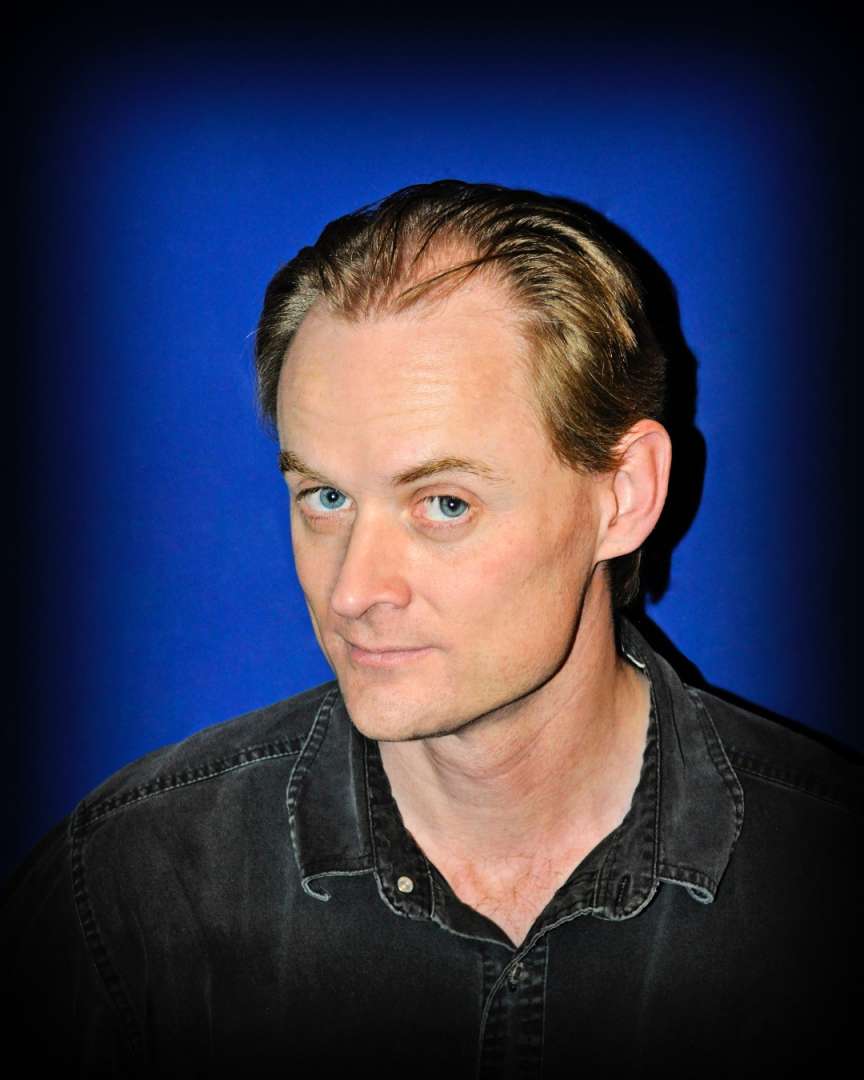
Our featured author is John Steiner. On November 20, 2016, he was WVU’s chat guest speaker. Out of his twenty-two books, eighteen are part of his FLIPSPACE series and are less than one hundred pages long. He is currently working as a tutor in math and chemistry at Salt Lake Community College.
“When the dead rise they’re not your friends or family any longer. They just want to feed off your blood, and only daylight keeps them at bay if you can make it to dawn.”
That is the kind of blurb I wrote for the vampire horror novel, Dead Run.
Dead Run was, as much as anything, an experiment to see if vampires can frighten an audience in the post-Twilight age. What I discovered while creating the right timing for horror is that it’s identical to the timing for humor; I had heard that horror and comedy are close cousins.
Vampires just needed the right imagery and environment to be made frightening again. So, I reached back to its Carpathian roots to find a version that is closer to today’s zombies. By stripping out the person they used to be, that fear of the undead was very easy to replicate; leave in enough of the vampire’s mind so they could talk and use tools all the scarier
What was your thought process as you wrote your FLIPSPACE series?
I figured people were too busy to sit down for novels and offered a simple deal: Give me a dollar and an hour and I can offer an adventure. These are stories that could be enjoyed in full during a lunch hour and cost less than the coffee in your other hand. From there I framed the series into what one would expect of a cable TV series, where a season has a fixed number of episodes within a plot arc that is resolved by story twelve.
How long does it take you to write a novel? It’ll vary a great deal. Some might take a full year. With Dead Run, the first draft came to me in five weeks. I have a hard time writing if I don’t know where the story is going. If a part isn’t working I can’t proceed past that point until it does.
How did you begin your writing journey? I was disappointed with the science fiction I grew up with. The original Star Trek and the 1979 Battlestar Galactica was missing a lot for me, scientific ideas were wrong or felt too simple about the society and personalities.
That got me to reading science fiction. Authors who were the best at their craft came decades before me, and so the world building they did was from a dated future.
I started writing worlds before I knew I wanted to be a writer. My earliest work is bad enough I’d never seriously attempt at publishing it, but that’s before I got the best piece of advice I ever heard, “Everybody writes crap.” The trick came in knowing when I wrote crap, then fixed it or started something new that was better.
My first novel was written in 1998, but the first one accepted by a publisher was from 2005. The lesson was to keep at it.
What would you say is the most important part of writing a book? If you don’t love your characters or the world they live in, it will show in the work. Your readers will spot what you don’t love pretty much right away.
How do you create the world inside your novels? It came down to adding snapshots of the world and only when the story needed it at that moment. A reader doesn’t need to know about smart materials until they see it used. They’re not interested in a history of aerospace supremacy fighters until the radar and missile warnings turn up for the characters.
Some parts of the world I purposely withheld to build suspense.
Is Todd Nathanial Ash really a bioterrorist or just a guy who hacks genetic code for pranks? His backstory was
Readers get additional bits and pieces about who each character is and how the world shaped them into who they are.
Do you look to real-life to create your characters? In Flipspace, that definitely is the case. The Jade Continuum on Mars and Remote Space Conglomerated Industries (R.S.C.I.) are the dueling legacy arguments from the twentieth century; central planning versus unfettered capitalism. The Russian Federation isn’t different from its present-day counterpart, and Russians in the story are the product of Russian culture and history.
Gray area exists in both the protagonist as well as antagonists. With no absolute villains or heroes, with valid arguments from all sides.
Where do you find your ideas for your plot? With Flipspace, I figured out where human civilization would be in the late twenty-second century, and on capturing the feel of a classic space opera. It was borne of my disappointment with Star Trek Enterprise’s core premise of treading into the unknown being vaporized by a buzz-killing time traveler from four hundred years in the future.
It’s those first steps into unknown territory that really got my fingers tingling with excitement as I wrote the series. That moment in Apollo 11, where Walter Cronkite rubs his hands in anticipation when Neal Armstrong plants his first boot onto lunar soil, instilled a thrill that I want to experience again and again.
How do you write? I’ll see moments or snapshots of a story and have to gauge how far apart they are from each other and whereabouts they should appear in a story. Lately, I’ve come to a few practices that have become staples in my writing I put together a soundtrack that captures various moments. I devise characters with whom I disagree and then make them likable people.
I also have a guilty pleasure or writing up a
What is your favorite part of writing? Ideas are what really
Least favorite is editing.
What keeps you writing? I feel stories would keep coming to me regardless if I wrote them down. With some of my stories, I get the sense that the universe just needed a narrator and passed down the tale from nowhere into a dream of mine.
What is the hardest part of writing? What I find difficult is writing myself into a corner and realizing that if I simply delete the wall behind me, I’ll never forgive myself for taking an easy out. This is a challenge, if I can’t spot my own clues or alternatives then the reader won’t catch them either. If I can compel them to look harder, thus capturing their attention for the rest of the book.
What process did you go through to get your book published? It was submission after submission after still more submissions. I kept rejection letters back when they were snail-mailed and stewed over those to where I was motivated to prove the prior rejections wrong.
There’s a moment in Monty Python’s Holy Grail about the father explaining to his son, the prince about his grandfather being persistent enough to build four castles when the prior three sank into the swamp or was burned down by Saxons. “Persistence, my boy!”
Keep leaning into the wind of rejection and push through to where someone says “yes” instead.
What advice would you give to aspiring authors? Never be so clever and artsy that no one gets it. Editors are your best friends in revision, and that’s especially when you have infuriating moments at their suggestions. Know when a story is complete. You might have a fantastic idea for twenty full-length novel installments, but there is no guarantee your readers want to dredge through all that.
What are you working on now? I’m doing a Steampunk novel that involves a person from our timeline’s year of twenty-twenty who winds up in eighteen fifty-two but history and society are wildly different from what they remember
How can people connect with you? I have a Facebook fan page “John Steiner, Author”:
Twitter: https://twitter.com/JohnSteiner32
Website: walkingotherworlds.com: http://www.walkingotherworlds.com
Email: This email address is being protected from spambots. You need JavaScript enabled to view it.
What is your favorite literary quote?
“Somewhere, something incredible is waiting to be known.” –Carl Sagan